Anthropic's Most Capable Model Yet Still Cannot Verify Its Own Output

Anthropic’s Claude Mythos Preview identifies Linux kernel vulnerabilities and writes working privilege-escalation exploit chains. It reasons through 32-step corporate network attack simulations. The UK’s AI Security Institute, a research body, not a regulator, says it succeeds 73% of the time on expert-level cyber tasks that no model could complete before April 2025.
This is not a trivial improvement. It is a step change.
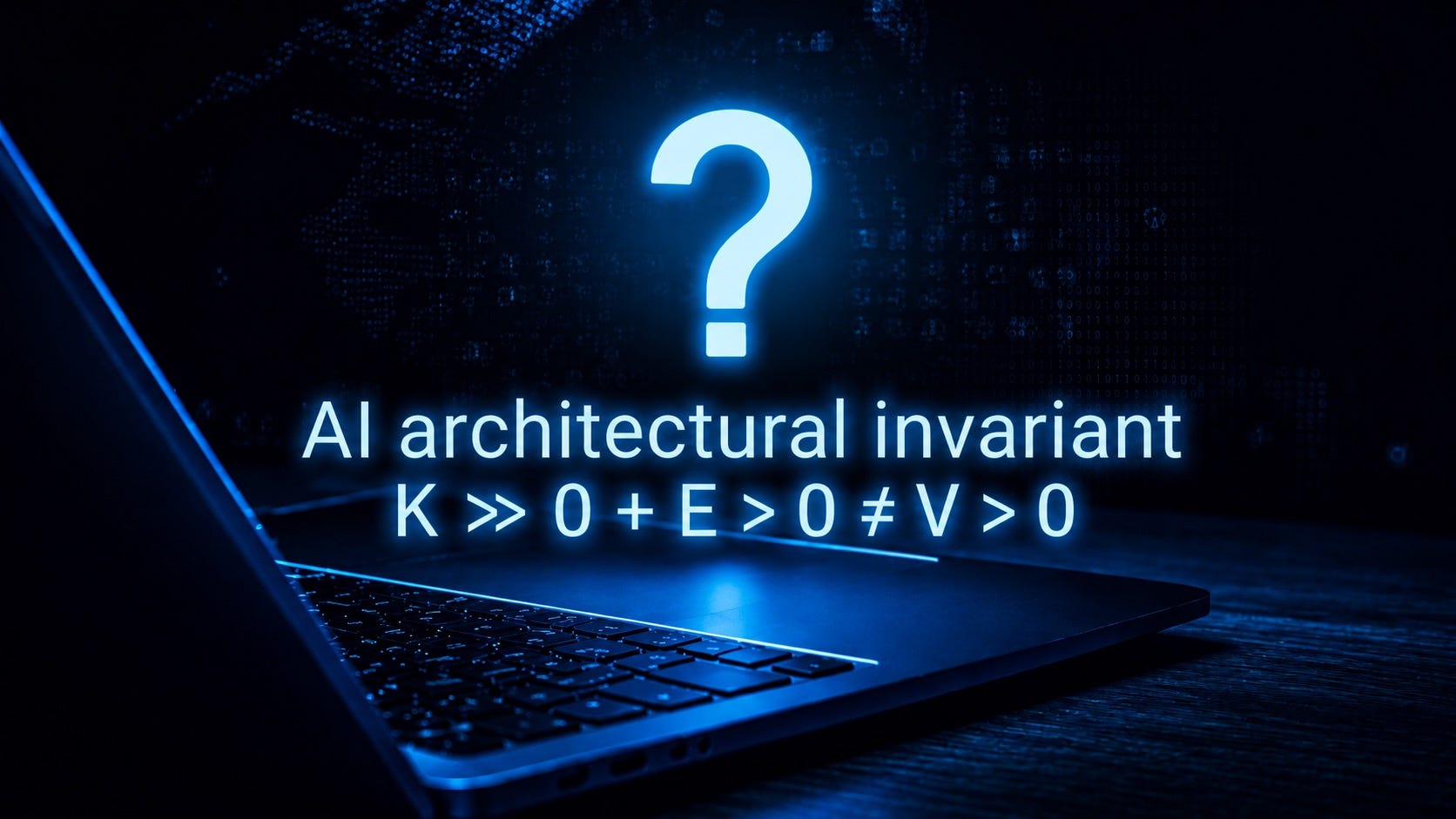
None of it alters the one architectural fact that matters. The model cannot verify its own output at the point of generation. A more capable model is not a safer model. It is a more persuasive one. And persuasion without verification is one of the oldest institutional failure modes there is.
The Leak And The Launch
Before the formal announcement, Fortune reported that Anthropic had exposed unpublished material through a CMS configuration error. The leaked cache included details of Mythos and an invite-only CEO summit in Europe tied to enterprise sales. Roughly 3,000 unpublished assets were accessible. Anthropic confirmed the model’s existence and described it as the most capable it had built to date.
On the visible facts, this was an operational failure, not a marketing manoeuvre. The exposure ran through a packaging error, and the company’s own takedown effort then mistakenly hit thousands of unrelated code repositories before being reversed. But intent is not the point, and the article does not need it to be. The effect is what matters. A high-capability model entered public consciousness already wrapped in scarcity, danger and executive relevance. The result was not consumer excitement. It was institutional demand.
There is nothing novel about the mechanism. Scarcity has always shaped demand. Preannouncement has always shaped markets. The playbook is old. AI has simply given it a more dangerous surface.
Defensive Framing Does Not Remove Dual-Use Reality
Mythos is positioned as a defensive initiative. Anthropic enrolled AWS, Apple, Broadcom, Cisco, CrowdStrike, Google, JPMorganChase, the Linux Foundation, Microsoft, NVIDIA and Palo Alto Networks as Glasswing launch partners, extended access to more than 40 additional organisations and committed up to $100 million in usage credits alongside $4 million in donations to open-source security bodies.
This is coalition design. Each partner lowers adoption anxiety, distributes legitimacy and tells the market that Mythos is already inside the perimeter of serious institutions. They were not captured. They were enrolled. And their presence made the model harder to treat as an experiment and easier to treat as infrastructure.
A defensive frame, even a sincere one, does not retire dual-use reality. The capability that finds a vulnerability to patch it is the same capability that finds it to exploit it, and the distinction lives entirely in the controls around the model, not in the model. Anthropic’s own position concedes the force of this: it has declined to release Mythos generally precisely because the safeguards that would stop misuse do not yet exist. That is the unusual case where the vendor and the critic agree on the hazard. The disagreement is only about whether partner-gating and withheld release are sufficient control, and the honest answer is that nobody yet knows, because the installed base is still small. The pattern worth watching is the familiar one: a capability enters inside a narrow public-interest frame, the base grows and the original constraints come under pressure they were never tested against.
Validation Does Not Stay In Its Lane
AISI’s evaluation was technically rigorous. It showed substantial gains in cyber capability and confirmed that Mythos represents a step up over previous frontier models. That work deserves to be taken seriously on its own terms.
The problem is that public validation never stays contained.
AISI is a research body within DSIT. It is not a regulator. It was explicitly established as such. Yet once a state-backed institution publicly confirms that a frontier model represents a material capability jump, that finding spills outward. The UK government’s own open letter to business leaders on 15 April warned that a new generation of models can now find software weaknesses and write exploit code at a speed and scale impossible a year earlier. It cited AISI as one of the world’s leading bodies for evaluating frontier AI and described its assessment as independently verified and robust.
At that point the evaluation stops being merely technical. It becomes a market signal. Institutions hear that the model has been assessed, tested and independently examined. The distinction between capability and reliability survives on paper. In practice, it collapses.
The credit-rating precedent is instructive, but not in the obvious way. The danger here is not that AISI is unreliable. On the evidence, AISI was right: the capability is real. That is exactly what makes the dynamic hazardous. Moody’s failed by misrating risk. AISI succeeded at rating capability, and the risk is that an accurate capability assessment is read as a reliability warrant for deployment it never evaluated. AISI tested what the model can do in a controlled range. It did not test, and could not, whether a bank acting on the model’s output six months later can reconstruct and defend that decision. The rating agencies at least purported to rate the thing the market relied on. Here the assessment and the reliance are about two different things, and the institutional ear hears them as one. A correct technical finding becomes a market permission it was never scoped to grant. That is the failure mode, and it does not require anyone to be wrong.
Government Attention And Scarcity Are Becoming The Category Script
Once Mythos was public, government attention escalated fast. Reuters reported that US, Canadian and British officials met banks to discuss Mythos-related threats. The ECB began gathering information to question banks about readiness. The European Commission confirmed discussions with Anthropic about its cyber models. The White House met Anthropic’s chief executive to discuss collaboration on safety and cybersecurity. The Bank of England’s governor warned publicly about major cyber risk.
That may look like oversight. It also functions as amplification. When a model triggers White House meetings, EU discussions, central bank briefings and formal letters to business leaders within days, oversight intended to contain the risk starts helping to certify the importance of the product.
And then the pattern repeated. One week later OpenAI launched GPT-5.4-Cyber with the same logic: restricted access, vetted users, tiered permissiveness. That is when a release strategy stops looking like a company choice and starts looking like a category script. Safety framing, scarcity and premium access are no longer parallel features. They are becoming the commercial grammar of frontier cyber AI.
Restricted access can serve more than one function. It can reduce misuse risk, preserve institutional legitimacy and limit distillation by rivals. Those motives are not mutually exclusive, and from the outside they may be operationally indistinguishable. If the motive cannot be reliably distinguished, it cannot do the evidential work of assurance.
The Systemic Problem Nobody Is Governing
The banking coverage reveals something larger than individual institutional risk. Barclays’ chief executive called Mythos a serious threat to the global banking system and warned that more such models will follow. Experts noted that banks share narrow sets of legacy systems and common vendors, creating broad vulnerability surfaces.
This is the concentration problem. When institutions share overlapping code bases, common vendors and the same old architectural seams, a model that gets better at finding weaknesses does not create isolated risk. It creates correlated exposure. The same fault lines. The same moment. The same shock moving across multiple institutions at once. That is not merely cybersecurity. It is systemic governance failure in waiting.
The scale is not hypothetical. Anthropic’s own expansion now reaches critical-infrastructure operators in power, water, healthcare and communications, and the company estimates that for most partners a major attack on their codebase could affect more than 100 million people. The defensive programme and the systemic surface are the same map.
And the deeper irony is this: the more widely Mythos is used to defend shared infrastructure, the more the system reorganises around a capability that no institution inside it can independently verify.
The Liability Question Nobody Is Asking
If an institution acts on Mythos output - patches a system, reprioritises security work, certifies remediation, decides not to escalate because the model appears confident - and that chain turns out to be wrong or incomplete, who carries the liability?
The model cannot be deposed. The institution does not own the underlying system. The reasoning chain is not self-authenticating proof. The vendor’s terms of service almost certainly disclaim consequential liability. So the liability migrates. Not into the model. Not to the vendor. Back into the institution. Which must now explain and defend a judgement it made under conditions of asymmetrical understanding, using output it could not independently reconstruct.
That is where the governance gap lives. Not at the point of capability. At the point where human approval tries to stand in for reconstructable proof.
What This Actually Confirms
The hardest truth in this episode is not that Anthropic moved aggressively. Most frontier firms will. It is not that governments reacted. They had reason to. It is that capability, scarcity, validation, stakeholder enrolment, competitive mirroring and state attention now combine into one reinforcing adoption signal - and that signal arrives long before institutions have solved the verification problem.
That is the pattern. Not conspiracy. Architecture.
There is a sharper confirmation inside the vendor’s own account. Anthropic’s update reports that the bottleneck has already moved: the hard part is no longer finding vulnerabilities but verifying, disclosing and patching the volume the model produces. That is the thesis stated by the seller. Capability ran ahead of verification, and the gap opened on the defensive side first.
Mythos does not overturn that architecture. It confirms it. The model gets smarter. The institution gets thinner. The vendor may now name the bottleneck, but it does not carry the downstream proof burden when institutions rely on the output.
The verification burden does not scale with capability. It inverts. And until institutions confront that inversion directly, they will keep mistaking escalation for governability, endorsement for assurance and adoption for control.
Author’s note: The framework applied here was developed before Mythos existed. The constructs named in this essay - the Synthetic-Plausibility Effect, epistemic debt and the architectural impossibility of self-verification at the point of generation - were published across the KEV series on SSRN and Zenodo before this launch occurred. This essay applies that framework to a live event. It does not retrofit one to it.
This essay sits within the KEV (V = 0) Academic and Practitioner Series on structural verification absence in enterprise AI. The full series is available on Zenodo and SSRN.